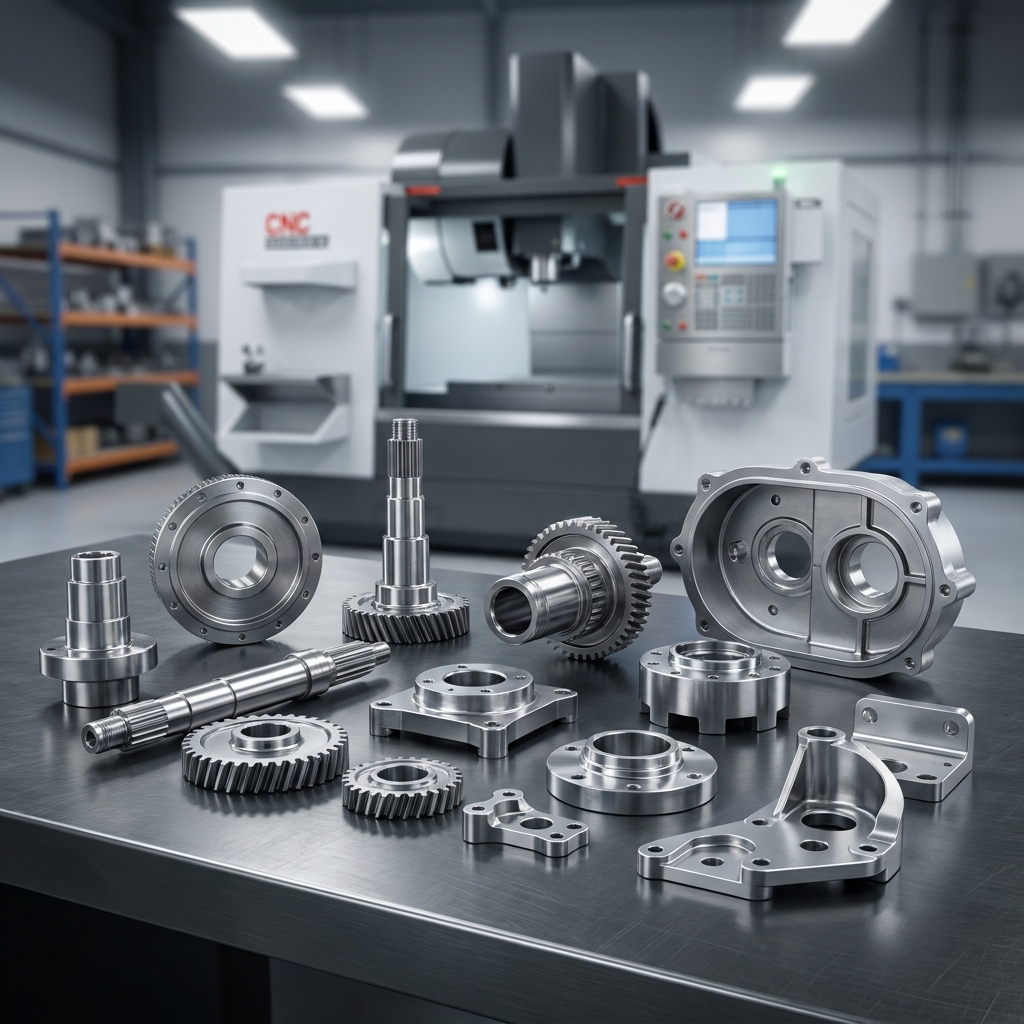
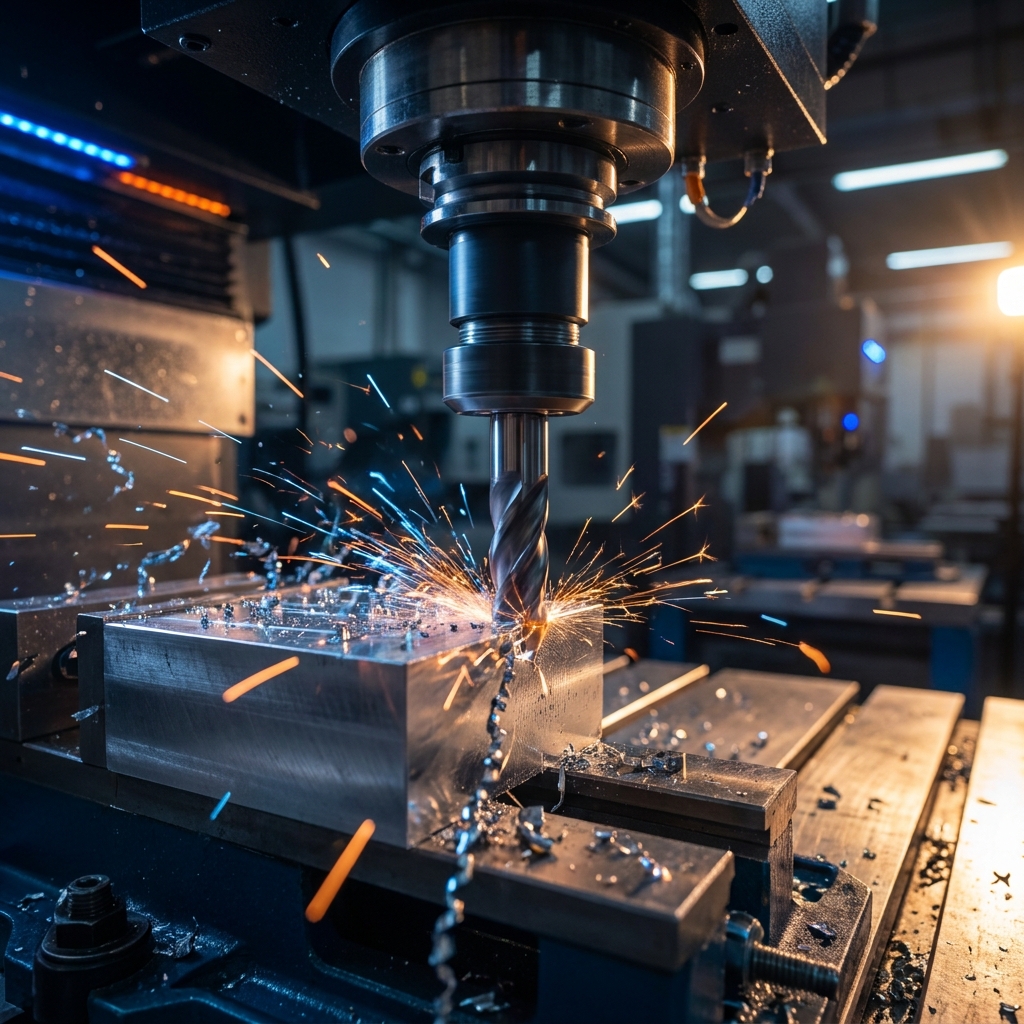
There is no denying it – these devices are the true foundation of today’s industrial production. From automotive, through medicine, to the aerospace industry – wherever precision and repeatability count, CNC machines play a key role. And if you are wondering whether it is worth investing in such technology (or outsourcing production to a company that possesses it) – this publication will dispel your doubts.
What are CNC machines? Principles of operation and device components.
A CNC machine (an abbreviation derived from the English words: Computer Numerical Control) is a computer-controlled device that automatically performs machining operations – based on programmed and previously uploaded instructions.
Their functioning can be described using several stages:
- First – the program (using code) defines the exact positions of the tool and machining parameters.
- Second – the control system reads the program, processes instructions, and then – in the form of signals transmits them to the motors that move the machine axes (mainly in X, Y, Z spaces, as well as other additional ones – depending on the project specifics).
The main components that make up the majority of CNC machines are: the controller (the so-called brain of the system), operator panel, motors and drive systems, guides, spindle (or head), position measurement systems.
Types of machines used for CNC machining – an overview
The term “CNC machines” actually refers to a whole range of machine tools which – depending on the type – are responsible for performing different operations, and consequently – achieving different results.
The most basic machining machines are, of course, CNC lathes, milling machines, plotters, boring machines, and grinders. The group of cutting machines includes precise laser, plasma, and waterjet cutters or EDM. The entire park of such machines is complemented by specialized machines, including: bending machines, punching machines, and industrial 3D printers. Selection of the appropriate device depends on the type of material being machined, required precision, and especially – the company’s resources and the planned scale of production.
In this publication, we decided to discuss the most important and simultaneously most popular CNC devices. Details about them can be found below.
CNC Milling Machines
They are considered the most popular type of CNC machines. Mainly due to their wide capabilities – regarding the size of produced elements and the type of work performed. They can be responsible for such operations as: flat surface milling, 3D contouring, drilling, threading, engraving, and even – machining complex spatial pockets.
However, “typical” operations, for which this type of machine is reached for, include: production of injection molds, mechanical details, electronic device housings, as well as prototypes and small elements.
You can read more about them in a separate post: CNC Milling Machine – what is it and how does it work?
CNC Lathes
They work in reverse to the previously described milling machines. In their case, the material rotates in the chuck, while the tool moves in the axes. Hence, they are perfect for the production of shafts, sleeves, flanges, precision screws, and cylindrical elements (especially in industries such as: automotive, industrial, hydraulics).
Depending on the type (2-axis lathes, multi-tasking, turret, etc.) – they can be responsible for performing various operations. From thread cutting, through axial drilling, to cutting off.
A detailed scope of functions and strengths can be found here: CNC Lathe – what is it? Application and method of operation.
CNC Plotters
This, in turn, is a group of CNC machines that are used mainly for engraving and marking, as well as (though less frequently) for cutting. Depending on the application – they use tools in the form of cutters, lasers, and knives, used for machining such materials as: metal, wood, and plastics.
Some CNC plotters work on small working areas, where they are perfect for the production of relatively small elements – such as: badges, plates, molds, and even – jewelry details. They also enjoy great popularity in operations related to marking (personalization) of various types of products.
Of course, in the CNC industry, we also eagerly reach for dedicated plotters for large dimensions. These, in turn, cope perfectly with machining elements that, precisely due to large sizes, are beyond the range of standard milling machines. Here, let examples serve us, such as entire plastic sheets (e.g., 2 x 3 m), and even large modeling molds.
What materials are machined on such devices?
As we have already mentioned – this group includes in particular plastics, wood, but also metals.
- The first is formed by, among others, structural steels, stainless steels, as well as hardened or cast iron, aluminum, copper, and brass.
- The second – various species of wood, but also – so-called wood-based materials (including plywood and MDF).
- The third constitutes plastics like ABS, polycarbonate, PMMA, POM, and Teflon.
Besides them, CNC devices cope splendidly with composites (carbon fiber and fiberglass), as well as special materials (graphite, ceramics, glass).
To be precise: plotters are “more delicate” than milling machines (because in most cases they have delicate electro-spindles – with high rotational speed). Therefore, they mainly serve for machining materials requiring special care – the aforementioned plastics and wood. Naturally, there are also machines that machine metals, however, these belong to the definite minority.
Precise components made using CNC machines?
It is worth noting that these types of solutions have completely changed the face of modern manufacturing. Thanks to them, it became possible to achieve precision in the order of thousandths of a millimeter – something that is practically impossible with manual machining. Automation also makes it so that machines can work around the clock, maximizing plant efficiency.
We produce them at the Maximus CNC facility! If you need professional support at every stage (from design to implementation) – contact us. Our advisors will happily help you, and a dedicated team of experienced engineers – will happily take care of your project “from A to Z”.