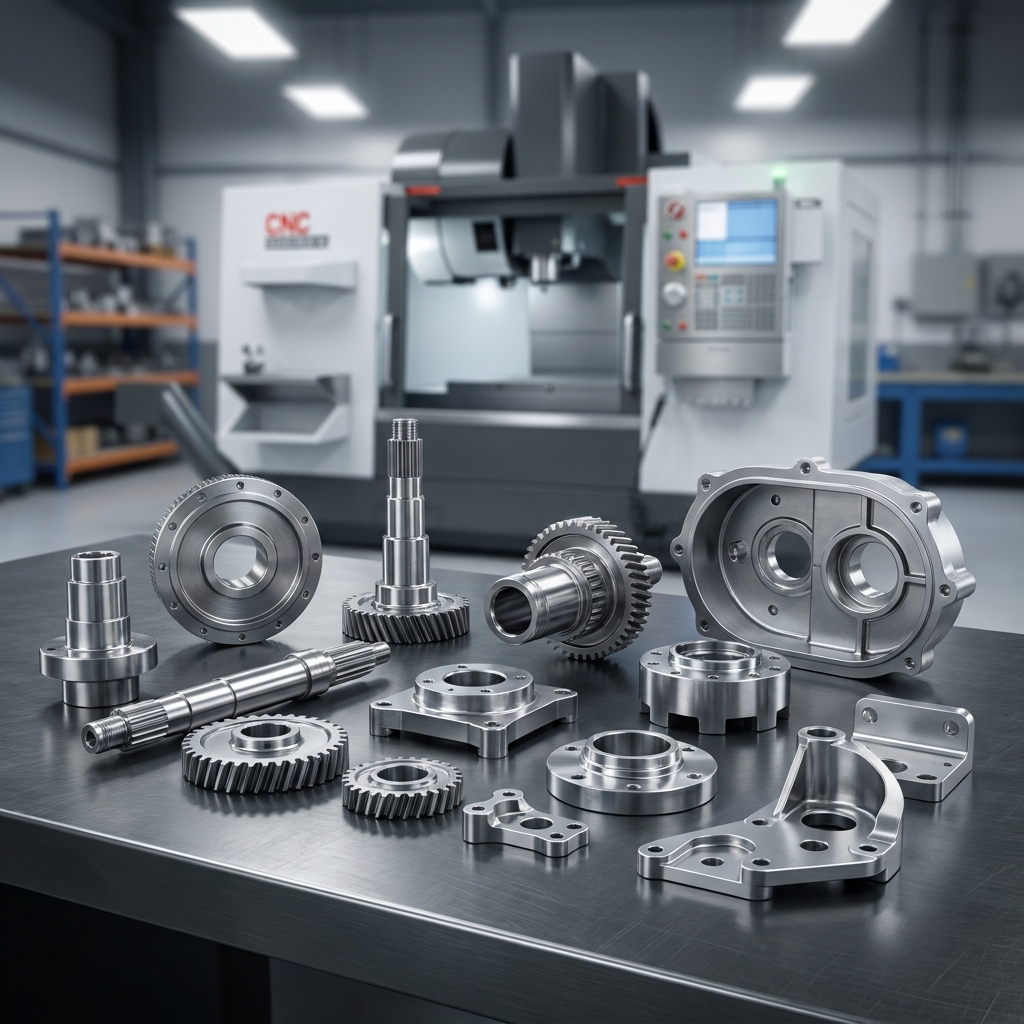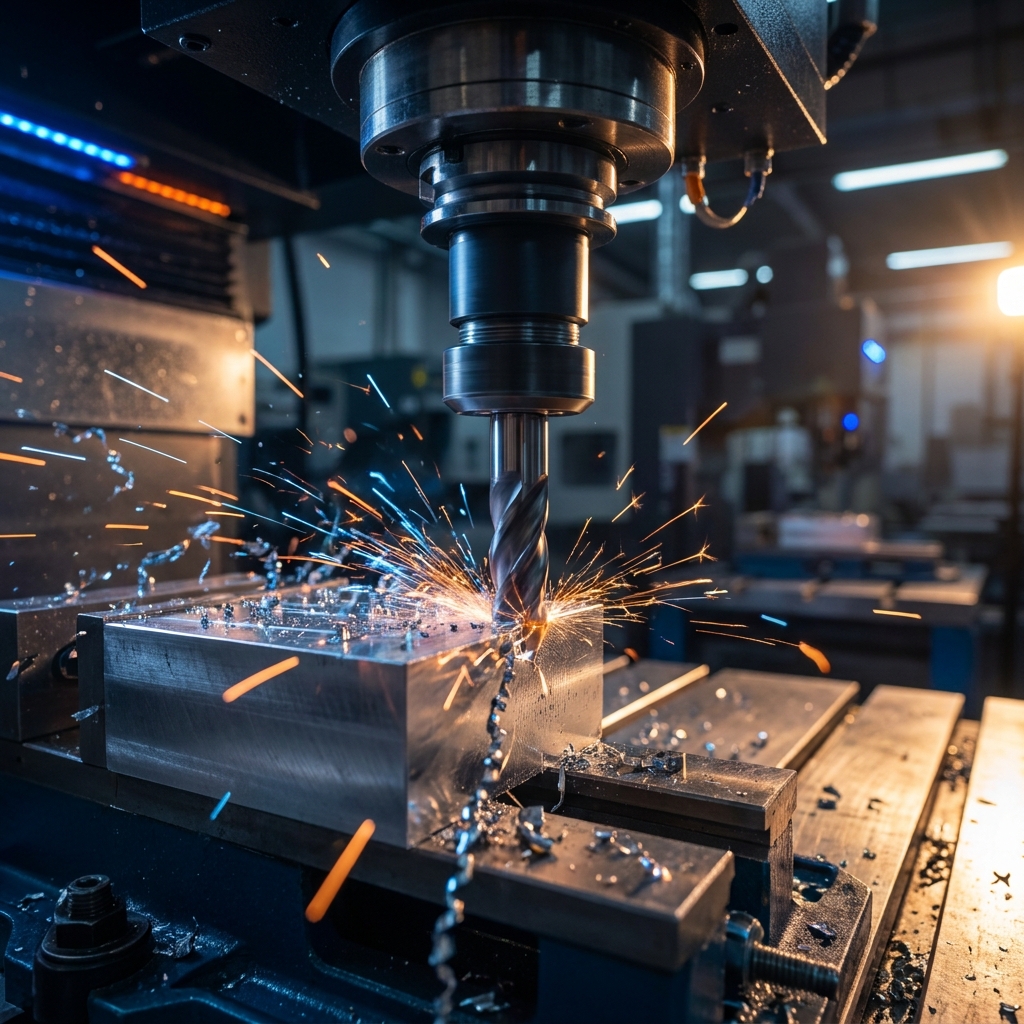
What does it take to produce ultra-precise components used across dozens of industries? From simple devices to complex machines and the most demanding technological solutions — the answer lies in CNC machining. Below we explain what it is, how it works in practice, and why it has become the foundation of modern industrial manufacturing.
What Is CNC Machining?
CNC machining (Computer Numerical Control) is the process of shaping materials using computer-controlled machines. Cutting tools — directed by a computer — remove excess material through cutting, drilling, turning, or milling, producing finished parts with precisely defined dimensions, parameters, and geometry. It is a technology that combines accuracy with repeatability and production scalability.
Core Methods of CNC Machining
The main types of CNC machining are classified by the nature of movement — either the tool or the workpiece. Each method has its own specific applications and tooling requirements.
CNC Milling
The most widely used CNC machining method. A rotating multi-edge milling cutter removes material as it moves along multiple axes. It is ideal for producing injection molds, electronic housings, mechanical components, and prototypes with complex geometries.
- Operations: external contour shaping, pocket and slot machining, face milling, 3D contouring
- Tools: end mills, ball nose mills, toroidal mills, thread mills, keyway cutters
- Materials: aluminium, steel, stainless steel, copper, bronze, Inconel, titanium, plastics (ABS, PVC, polycarbonate, PMMA), wood, plywood, MDF, composites
CNC Turning
A method dedicated to machining axially symmetric parts. The workpiece rotates in a chuck while the cutting tool moves along the axis. Used for producing shafts, bushings, flanges, precision screws, hydraulic components, and all types of cylindrical parts.
- Operations: external and internal turning, facing, thread cutting, parting, grooving
- Tools: turning inserts, carbide, CBN, and ceramic indexable inserts
- Materials: steel, stainless steel, aluminium, Inconel, copper, bronze, titanium, cast iron, plastics (POM, PTFE, PMMA), composites
CNC Drilling
The process of creating holes using a rotating tool that advances axially into the material. Used for mounting holes, through and blind holes, conduit channels, and thread preparation.
- Operations: through and blind hole drilling, reaming, countersinking, counterboring, tapping
- Tools: twist drills (0.1–50 mm), centre drills, countersinks, taps, reamers (precision ±0.005 mm)
- Materials: steels, aluminium, copper, brass, Inconel, cast iron, plastics (polyamide, POM, PEEK), wood, composites
CNC Grinding
A finishing method in which a high-speed abrasive wheel removes micro-layers of material to achieve the highest surface quality. Used for bearings, precision bushings, dies, guideways, and any components requiring tight dimensional tolerances.
- Operations: surface, cylindrical, internal, centerless, and profile grinding
- Tools: aluminium oxide, silicon carbide, diamond, and CBN grinding wheels
- Materials: hardened and tool steels, stainless steel, cast iron, aluminium, cemented carbides, ceramics
Multi-Tasking Machines — Combining Methods
Many modern manufacturers integrate multiple machining methods into a single process using multi-tasking machines capable of complete machining without re-fixturing. This approach shortens production time, minimises errors from workpiece transfers, and reduces unit costs — especially in series production.
What Materials Can Be CNC Machined?
CNC technology stands out for its exceptional material versatility. Correct machining requires selecting the right cutting parameters and tooling for each material. The main material groups include:
- Ferrous metals: structural, stainless, tool, and hardened steels, as well as cast irons
- Non-ferrous metals: aluminium, copper, brass, titanium, nickel alloys
- Plastics: polyamide, POM, PTFE, PEEK, and others
- Wood and wood-based materials: plywood, MDF
- Special materials: composites (carbon fibre, fibreglass), graphite, ceramics
Looking for a Professional CNC Machining Partner?
At Maximus CNC we provide comprehensive CNC milling, turning, and precision machining services. We operate a modern machine park and a team of experienced specialists. Whether you need a prototype, a small batch, or full-scale mass production — we are ready to help. Get in touch and find out how we can work together.