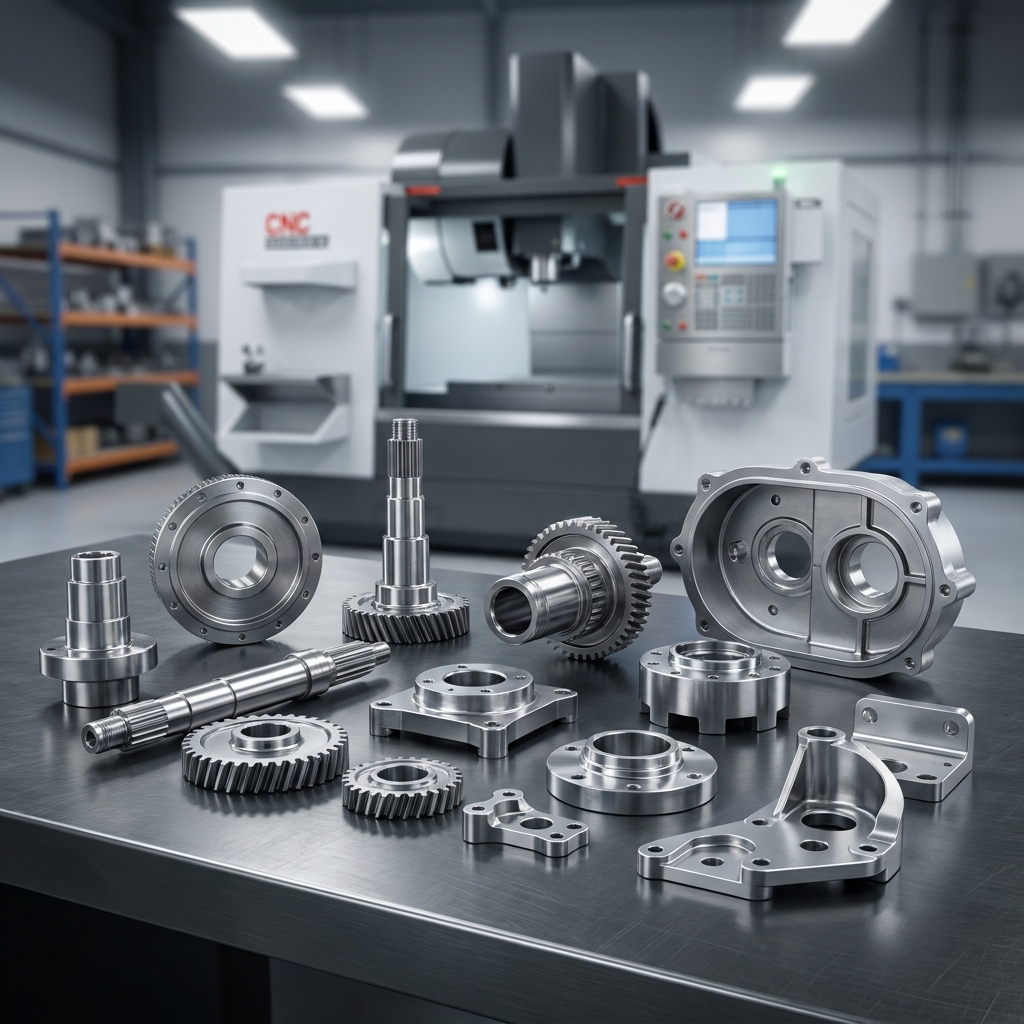
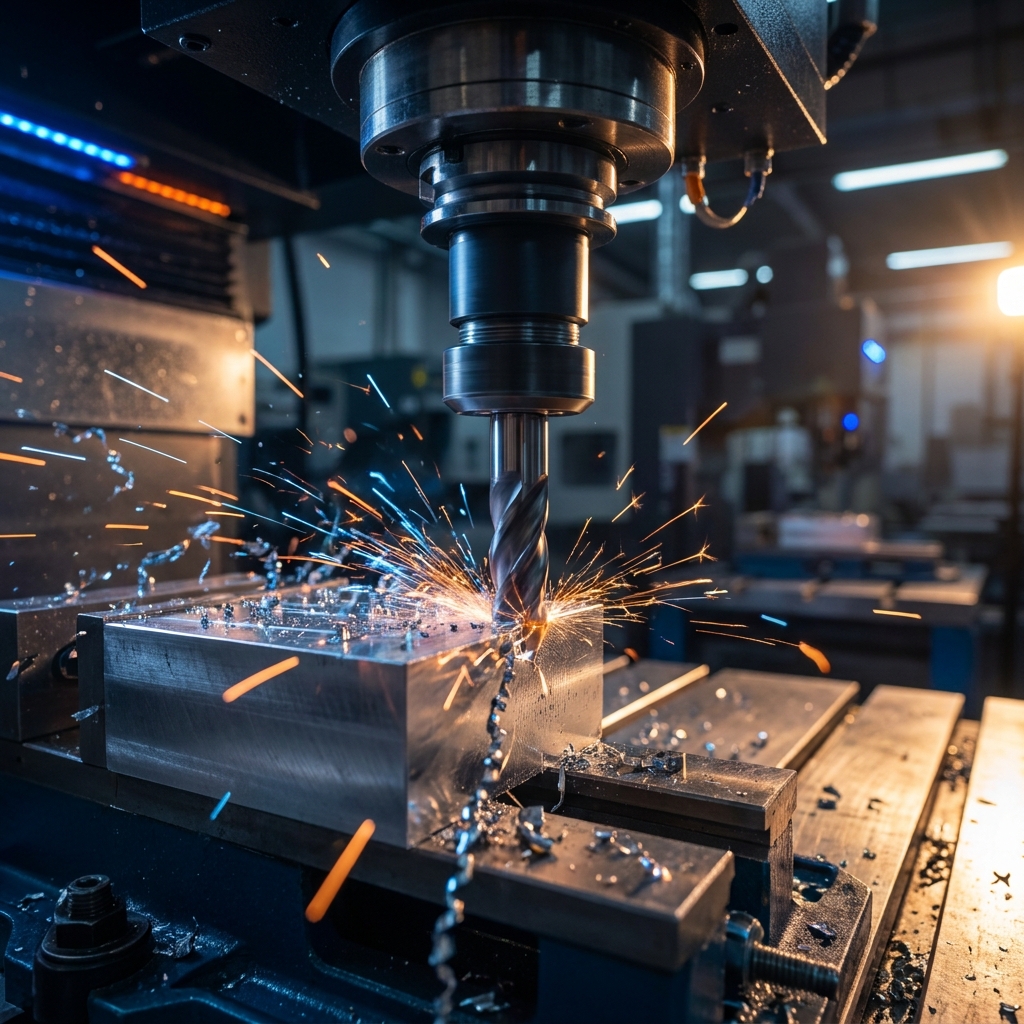
Definitely one of “those” tools without which modern machining is out of the question. At least the kind that allows creating impressively precise elements – and with repeatability you won’t be able to achieve with other, traditional methods. What is it, what does it consist of, how does it work, and why can it be effective support for your company? Everything related to CNC lathes awaits right here. Shall we start? Let’s go!
What is a CNC lathe? Construction and operating principles
It is a numerically controlled machine. The device rotates the workpiece, while the automatically positioned tool is responsible for machining it.
The construction of a CNC lathe includes several elements, which include:
- spindle,
- chuck,
- slide,
- guides,
- motors,
- cooling and lubrication system,
- control system and operator panel.
The operation sequence looks as follows: you mount the material in the lathe chuck, where it is rotated at the appropriate speed. During this time, the tool positions itself within the X and Z axes. The control computer is responsible for everything, controlling every movement fully automatically.
Interestingly, modern CNC lathes can also perform transverse operations and even drilling. The condition? They must possess additional spindles and axes.
What tools are used in lathes?
These include, among others: longitudinal turning tools, grooving and chamfering tools, as well as threading or facing tools. Materials from which they are produced play a large role in their purpose and effectiveness. And so:
- High-speed steel (HSS) – is cheaper, but wears out faster.
- Sintered carbides – are more expensive, but offer greater durability.
What can be machined using a CNC lathe?
There will be no big surprise here. The largest group obviously consists of metals (including: carbon steel, stainless steel, aluminum, copper, bronze, titanium, cast iron, etc.). It is worth noting that many of them require an individual approach (use of different machining parameters, different tools, etc.).
Plastics (such as ABS, PVC, PMMA, polycarbonate) are also quite popular. They require the use of sharp-edged tools and – due to the risk of melting – lower machining speeds. In this way, they find application in many industrial sectors:
- In automotive – for the production of engine elements and others.
- In hydraulics and pneumatics – for cylinders, nozzles, valve parts, and fittings.
- In medicine – for the production of implants, surgical tool parts, and prosthetic elements.
Advantages and limitations – what is worth considering?
CNC turning has its pros and cons. Among the strengths, we can count primarily the repeatability of the series, which makes every item almost identical and free of defects. Production optimization also deserves attention, i.e., shortening machining time, the possibility of creating the most complicated and complex elements, and additionally – performing several operations at the same time. Lathes are capable of working almost without interruption (provided supervision is maintained over them), and also limit material consumption and waste generation.
As for the disadvantages – these are similar to other devices in the CNC family. We include the necessity of incurring significant costs for the purchase and maintenance of the machine park (including both devices and specialists to operate them). Therefore, for many companies, it is more profitable to outsource CNC services – for example, directly to our facility in Warsaw.
Are you looking for a proven partner for precise CNC turning?
It just so happens that at Maximus CNC we deal with machining “from A to Z”. We provide professional services (on equally professional lathes), within which we make elements from various materials. Come to us with a ready-made project or use our support in its development. We invite you to contact us and for non-binding consultations.