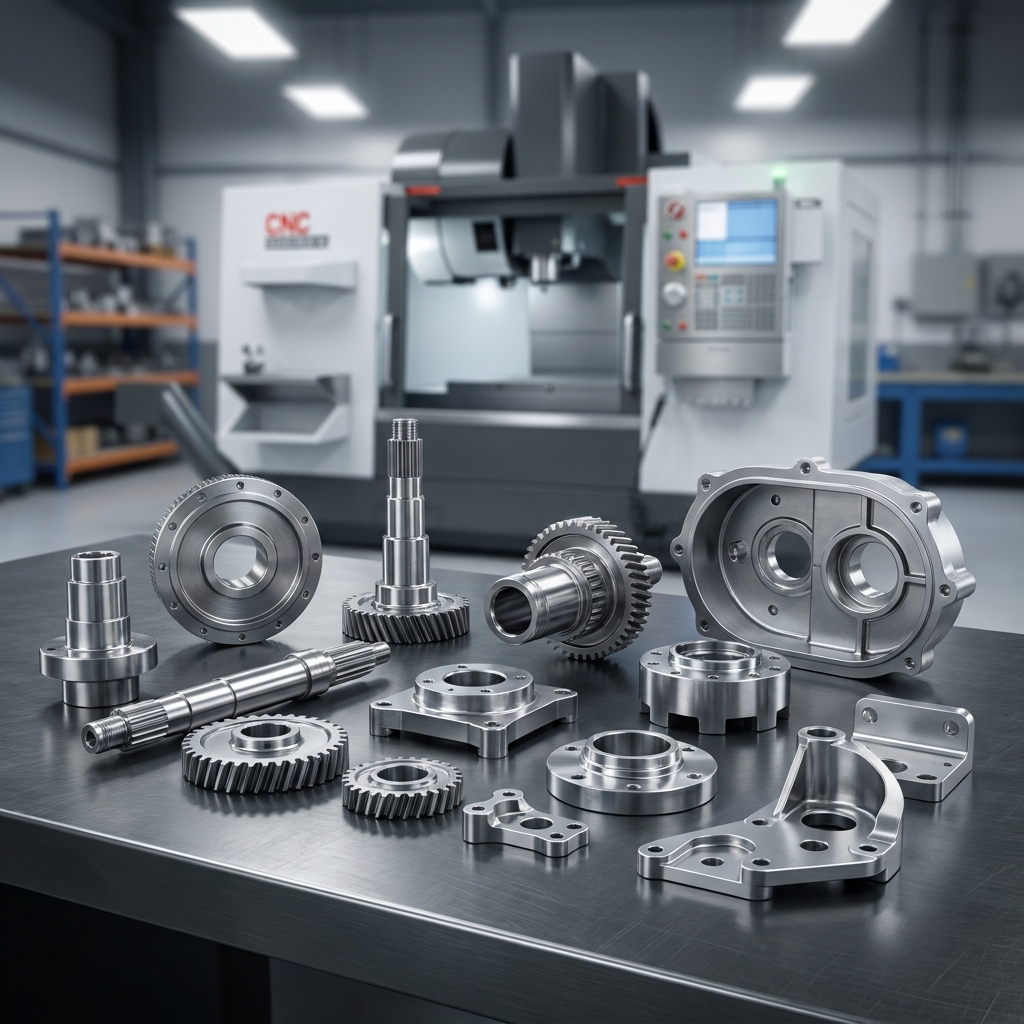
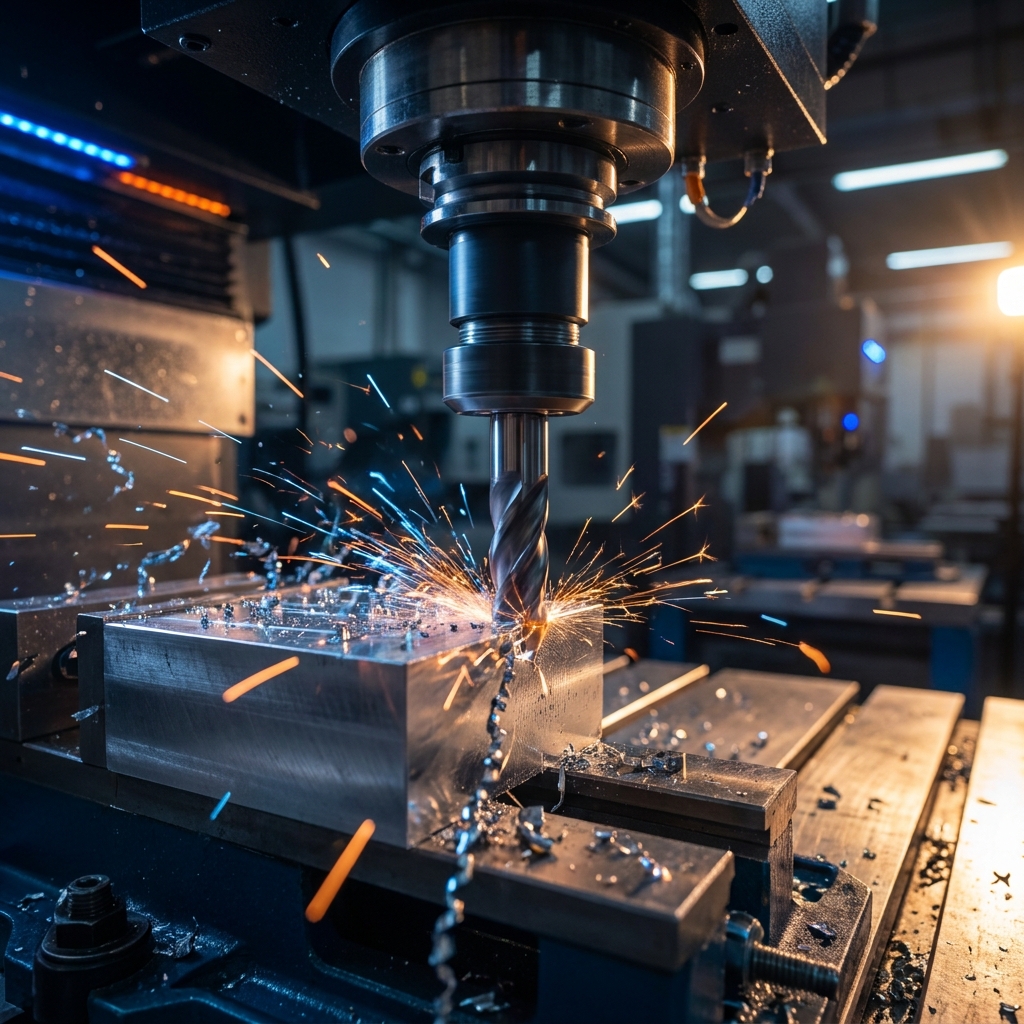
What are these types of devices? What do they consist of? How do they work and what are they used for? If you want to know – stay with us a little longer, at least until you read this entire post. Welcome!
We have included key knowledge about these machines in it. If you want to learn even more or simply use services in the field of cutting, engraving, and carving – remember that the Maximus CNC team is at your disposal.
What is a CNC plotter? How does it work and what does it consist of?
A plotter is a CNC (Computer Numerical Control) device used to process flat materials – “lying” on a table or fed from a so-called roll. Unlike a traditional plotter (which is basically a large-format printer), a CNC plotter does not print on the material. Instead, it is responsible for its physical cutting or engraving. It can be used to make simple inscriptions, as well as advanced and complex patterns.
In practice, the entire operation takes place on the following principles:
- First, the control computer reads the vector file to then convert it into motion instructions for the machine.
- It controls the motors – moving the head (on the X, Y, and Z axes, and additionally – rotating it in one or two additional axes).
- In this way, the tool in the form of a knife or laser moves along the programmed surface – making the appropriate cuts.
What are the types of CNC plotters?
Selecting the right device really depends on the type of CNC machining, materials, and – the scale of production. The basic division of these CNC machines includes such types as:
- Knife plotter – uses a blade to cut vinyl, foil, paper, and fabrics.
- Laser plotter – uses a laser beam for engraving and cutting organic materials (wood), and often – certain metals.
- Milling plotter – dedicated to working with slightly harder materials (wood, composites, metals).
Is that all? Not exactly. There is also a slightly less popular group, which includes, among others:
- Pen plotters (used, for example, for drawing plans and drafting schematics),
- Scribing plotters (used for engraving the surfaces of glass and metals themselves).
In this post, we focused on a more detailed discussion of those that enjoy the greatest popularity.
Knife plotters
These are professional devices equipped with heads with blades – with an adjustable angle of inclination (e.g., 30°, 45°, or 60°), as well as controlled pressure (depending on the material).
Using them, you can successfully work with materials such as: vinyl, transfer foil, paper, cardboard, various fabrics, eco-leather, laminates, and even magnets. They work perfectly for the production of a varied range of advertising assortment, as well as stickers and labels, templates, decorations, or dies.
Laser plotters
The principle of operation is simple. They generate a concentrated beam of laser light, which heats the given material – thus leading to the appearance of the so-called sublimation effect or simply burning it (creating precise contours or patterns). Importantly – this should not be confused with cutting. In the case of laser engraving, only a thin layer is removed – directly on the selected surface.
We distinguish two basic types of these devices:
- Plotters with a CO2 laser (with power ranging from 30 to even 500 W). They are chosen especially for large-scale production – for example, in industry.
- Plotters with a diode laser (with definitely lower powers ranging around 5 – 20 W). These are cheaper, and consequently – used for smaller projects.
Materials processed using a laser include: wood and plywood, fabrics, leather, paper and cardboard, as well as acrylic, plexiglass, and other selected plastics (except PVC, which under the influence of high temperature can emit toxic and dangerous substances).
Milling plotters
It can be said that they are an alternative to CNC milling machines. With the difference that they use rotating cutters (with an electric spindle).
They are suitable for working with materials such as: solid wood, veneer, MDF boards, plywood, foams, and plastics. Less often for metals (and if so – only more delicate ones like aluminum or copper). Applications include: creating prototypes and small series of products, plates, signs, casting molds, modeling elements.
What materials are processed using plotters?
As you are probably already able to deduce after familiarizing yourself with the characteristics of individual devices – the spectrum is really wide. Depending on the type of plotter, you can reach for various materials:
- For knife (blade): self-adhesive vinyl (most common – inscriptions, stickers), flex and flock foil (thermal transfer for clothing), paper and cardboard (up to 300 g/m²), fabrics (cotton, jersey, felt up to 3 mm), eco-leather, flexible magnets.
- For laser: plywood and wood (up to 10 mm for CO2 40 – 60W), acrylic (up to 20 mm), cardboard, natural fabrics, natural leather, rubber, cork.
- For milling: wood and MDF (up to 20 mm), engineering plastics, modeling foams, and aluminum.
When choosing, remember an important rule that some materials are simply not suitable. A prime example is PVC. In contact with a laser beam, it emits toxic fumes, and the material itself becomes too soft. The choice of thickness and general preparation of the material for processing (cleaning and securing the surface) also play a significant role.
Do you want to be sure that everything will go according to plan? Before you start full-scale processing – conduct tests. In case of any problems, they will give you time to adjust the parameters to the specific material.
Do you want to order ultra-precise elements?
We hope that understanding the capabilities of CNC plotters will help you choose the right solution. And if you prefer to entrust the implementation to specialists – even better, because you will know exactly what to expect.
With Maximus CNC, this is not a problem. As part of our many years of activity, we deal with comprehensive processing – from milling and turning to cutting and engraving. Cooperation with us is supported by: experience, high competence, many successful projects (including those for renowned institutions), and also – the fact that we have a modern machine park.
Do you have your own idea, a ready-made design, or do you need comprehensive support from the very beginning? We invite you to contact us, and we will help you realize your undertaking.